



 Shop
Shop

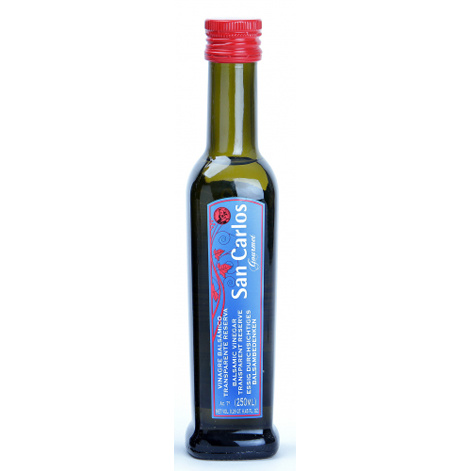
San Carlos transparent balsamic vinegar made from 100% Pedro Ximénez grapes. Aged for 5 years in American oak and naturally clarified. Aromatic and sweet-sour without adding dark colour to a dish. Read more
That may sound surprising, but under European protection it is not the single word balsamic that is protected. What is protected, for example, is the full designation Aceto Balsamico di Modena I.G.P.
The European Court of Justice has explicitly ruled that the protection of this Italian I.G.P. does not extend separately to the words aceto and balsamico. A vinegar therefore does not have to come from Modena – or even from Italy – to use the word balsamic.
The word balsamic quickly makes us think of Modena and dark Italian vinegar. San Carlos, however, comes from Extremadura in Spain and is made from Pedro Ximénez grapes.
The producer itself uses the name Vinagre Balsámico Transparente. We therefore also describe it as white balsamic, but it should not be confused with Balsamic Vinegar of Modena I.G.P. This is a Spanish balsamic-style PX vinegar with its own production method and flavour profile.
Pedro Ximénez, usually shortened to PX, is a Spanish grape best known for intensely sweet wines. It can deliver a particularly rich and aromatic character.
In this vinegar, those riper and sweeter notes sit opposite fresh acidity. The result is considerably rounder and softer than a simple white wine vinegar.
The vinegar ages for five years in American oak barrels using the traditional criaderas y soleras system. During this period it develops greater roundness, aromatic depth and subtle wood influence.
The unusual step comes afterwards: according to the producer, the dark colour is removed through a natural process. The aim is to retain the aromatic qualities of the aged vinegar while making it visually clear.
Dark balsamic immediately colours a dish brown. With tomatoes, red meat or Parmigiano that is usually no problem. With scallops, white fish, a pale sauce or a delicate salad, however, it can interfere with the presentation.
That is where San Carlos becomes special: fresh acidity, soft sweet notes and aromatic depth without dark streaks across the plate.
The combination highlighted by chef Sander Spruijt is exactly what makes San Carlos interesting: clear, fresh acidity set against softer, riper and lightly sweet notes. With refined dishes in particular, the combination of flavour and transparency is extremely useful.
Quickly sear scallops and serve them on a smooth cauliflower purée. Add good Extra Virgin olive oil, sea salt and a few drops of San Carlos. You get the sweet-sour tension without a dark balsamic streak across the plate.
Slice fennel very finely and combine with orange segments and briefly sautéed prawns. Finish with Extra Virgin olive oil, a few drops of transparent PX vinegar and some fennel fronds.
Serve vanilla ice cream with ripe peach or nectarine. Add only a few drops of San Carlos. The soft PX notes add depth and freshness while the dessert remains bright and light in appearance.
The term white balsamic tells only half the story. What makes San Carlos particularly interesting is the combination of Pedro Ximénez, five years of wood ageing, fresh acidity, soft sweet notes and its transparent appearance. It lets you add balsamic depth to light and refined dishes without darkening the presentation. So it is easy to understand why a Michelin-starred chef describes it as a “tremendous addition”.
| Content | 250ml |
| Country of origin | Spain |